
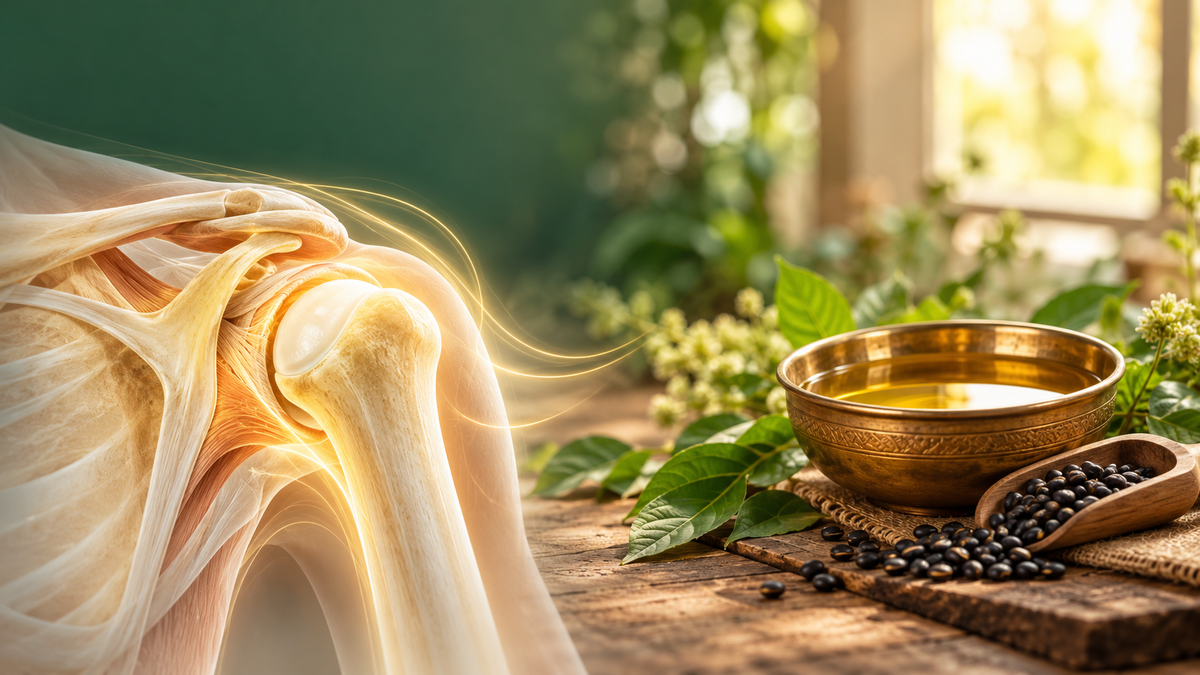
Brushing your hair, reaching a high shelf or turning over at night suddenly hurts? Learn what a frozen shoulder (Avabahuka) is, how long it lasts and what to do daily.
Frozen Shoulder?
See how many of these sound familiar:
- Shoulder pain started gradually and has lasted for several weeks.
- Lifting your arm up or behind your back is hard (combing hair, fastening a belt, dressing).
- Even when someone else lifts your arm, it does not go all the way up.
- Pain gets worse at night and disturbs your sleep.
- You have diabetes or a thyroid problem, or you recently had an arm injury or surgery.
If several apply, a frozen shoulder is possible. But other problems can cause shoulder pain too, so only a doctor can confirm the cause.
What Is a Frozen Shoulder?
Your shoulder joint is wrapped in a capsule of connective tissue. Mayo Clinic explains that in frozen shoulder this capsule thickens and tightens around the joint, which limits movement. The medical name is adhesive capsulitis. Doctors do not always know exactly why it happens, and it develops slowly.
The Three Stages: What to Expect
| Stage | What happens | Approximate duration |
|---|---|---|
| 1. Freezing (painful) | Any movement hurts, range of motion starts to shrink, night pain is common. | 2 to 9 months |
| 2. Frozen (stiff) | Pain may ease, but the shoulder becomes stiffer and daily tasks get harder. | 4 to 12 months |
| 3. Thawing (recovery) | Movement slowly begins to improve. | 5 to 24 months |
Everyone moves through these stages at their own pace. Patience and consistency matter most.
Who Is More Likely to Get It?
- People aged 40 and above, especially women.
- People with diabetes, thyroid problems, heart disease or Parkinson's disease.
- Anyone who kept the shoulder still for long after an injury, broken arm, rotator cuff injury or surgery.
- Smokers, according to NHS patient information.
The Herbal View: Avabahuka
Botanical Wellness calls this condition Avabahuka. A published narrative review describes it as a state where aggravated Vata settles in the shoulder region (amsa pradesha). Classical features include shoola (pain), stambha (stiffness) and reduced bahu praspandana (arm movement). The same review notes that it affects roughly 2 to 5 percent of people.
Traditionally, Herbal literature on Avabahuka mentions Nasya karma (medicated oil through the nose), Masha (black gram) based oil such as Laghumasha Taila, and herbs such as Ajmoda and Hapusha. These are chosen individually by a trained physician.
An honest note: most studies on this topic are small case studies or reviews. So think of Herbal approaches as traditional supports, not guaranteed solutions.
Daily Do's and Don'ts
| Do | Don't |
|---|---|
| Keep moving the shoulder gently, within comfort. | Keep the shoulder completely still out of fear of pain. Stiffness can increase. |
| Follow exercises from your doctor or physiotherapist regularly. | Invent strenuous exercises, especially with gym equipment. |
| Keep an upright posture with shoulders gently back. | Hunch over a phone or laptop for hours. |
| Use both arms in daily tasks and gently use the affected arm too. | Smoke, or self-medicate for pain. Ask a doctor or pharmacist. |
| Find a comfortable sleeping position and support the arm with a pillow. | Push through sharp pain. If it gets worse, stop. |
A Simple Example: Gentle Pendulum Movement
NHS patient leaflets mention gentle exercises such as the shoulder pendulum. You lean forward slightly with your good hand resting on a sturdy table, let the affected arm hang loose, and gently sway it in small circles or back and forth. Ask your doctor or physiotherapist whether this suits you and how often to do it.
Before you follow any usage guidance: every body is different. Speak to your doctor or a qualified Herbal physician before starting any herb, oil, supplement or exercise routine, especially if you are pregnant, nursing, taking regular medicines or have a health condition.
Where Vegaa Life BackBone Combo Fits
Vegaa Life makes its Herbal products at its own farm in Gujarat. The BackBone Combo (tablet and oil) is offered as general bone and joint wellness support for daily care, alongside balanced food, gentle movement and enough rest. It is a wellness product, not a medicine. It does not diagnose, treat or cure any condition and is not a substitute for medical advice.
Red Flags: When to See a Doctor
- Get emergency help immediately: shoulder or left-arm pain with chest pain or pressure, breathlessness, dizziness or cold sweat.
- Sudden severe pain, swelling or a changed shoulder shape after an injury or fall.
- Fever with a red, warm, swollen shoulder.
- Numbness, weakness or tingling in the arm or hand.
- Pain and stiffness that do not ease over several weeks, disturb your sleep or make daily tasks difficult.
NHS also advises seeing a GP if shoulder pain and stiffness do not go away. A doctor can guide you on pain relief, physiotherapy and, where needed, other options such as injections.
Key Takeaways
- Frozen shoulder develops slowly and usually improves through three stages.
- Gentle, regular movement helps more than keeping the shoulder still.
- Botanical Wellness calls it Avabahuka; traditional approaches belong under a physician's guidance.
- Diabetes or thyroid problems raise the risk, so mention them to your doctor.
- Shoulder pain with chest symptoms is an emergency.
Frequently Asked Questions
What is Avabahuka?
Avabahuka is an Herbal condition in which aggravated Vata is considered to settle in the shoulder region (amsa pradesha), leading to shoulder pain, stiffness and restricted arm movement. Modern medicine commonly compares it with frozen shoulder, also called adhesive capsulitis. The two systems use different frameworks, so treat the comparison as approximate.
How long does a frozen shoulder last?
According to Mayo Clinic, frozen shoulder begins gradually, worsens over time and then improves, usually within one to three years. It moves through three stages: freezing (about 2 to 9 months), frozen (about 4 to 12 months) and thawing (about 5 to 24 months). Timelines differ from person to person.
Who is more likely to get a frozen shoulder?
It is more common in people aged 40 and above, especially women. Diabetes, thyroid problems, heart disease and Parkinson's disease can raise the risk. Keeping the shoulder still for a long time after an injury, fracture or surgery can also increase the chance.
Should I rest my shoulder completely when it hurts?
No. NHS advice is that keeping the shoulder still can make pain worse, so move it gently within a comfortable range and follow exercises given by your doctor or physiotherapist. Avoid inventing strenuous exercises on your own, especially with gym equipment.
Which traditional Herbal approaches are mentioned for Avabahuka?
Herbal literature on Avabahuka mentions Nasya karma, Masha (black gram) based oils such as Laghumasha Taila, and herbs such as Ajmoda and Hapusha. Most available studies are small case studies or reviews, so evidence is still limited. These approaches should only be used under the supervision of a qualified Herbal physician, never as self-treatment.
What can I do if the pain is worse at night?
Night pain and disturbed sleep are common in frozen shoulder. Changing your sleeping position and supporting the arm with a pillow may add comfort. If night pain keeps disturbing your sleep, speak to a doctor about suitable pain relief.
When should I see a doctor?
See a doctor if shoulder pain and stiffness do not go away, if moving your arm becomes difficult, if pain worsens at night, or if severe pain follows an injury. If shoulder pain comes with chest pain, breathlessness, sweating or pain in the left arm, seek emergency medical help immediately.
Where does BackBone Combo fit in?
BackBone Combo is a Vegaa Life Herbal tablet and oil combination offered as general bone and joint wellness support for daily care. It is not a medicine, it does not diagnose, treat or cure any condition, and it is not a substitute for medical care. Please consult your doctor before use, especially if you are pregnant, nursing, on medication or have a health condition.
This article is for general educational purposes only. It is not medical advice and does not diagnose, treat, cure or prevent any condition. Please consult a qualified doctor or Herbal physician about your shoulder pain.



Discussion & Reader Comments (0)
Be the first to share your thoughts on this botanical guide!
Leave a Comment
Your email address will not be published. Required fields are marked *